Last updated: May 2026
Communal Granary Buildings in the Medieval Towns of Emilia-Romagna
In the 12th and 13th centuries, the communes of Emilia-Romagna developed a system of civic grain management that went well beyond simple storage. The public granary — known variously as the grascia, the frumentaria, or the ufficio dell'annona — was a fiscal and political institution as much as a physical structure. Understanding the buildings requires understanding the regulatory framework they served.
The Institutional Context
Medieval Italian communes faced a chronic tension between free-market grain trading and the need to prevent famine-driven social unrest. Bologna's Comune resolved this by maintaining a strategic reserve — grain purchased at harvest time when prices were low and released during shortages to cap market prices. The buildings that housed this reserve had to meet specific functional requirements: ventilation to prevent spoilage, access for carts large enough to unload sacks quickly, and a location within the urban core where the reserve could be supervised and distribution managed.
The surviving documentary record for Bologna, assembled by medievalist Maria Teresa Guerra Medici in her 1971 study of Bolognese food administration, shows that the commune was purchasing grain in bulk from at least 1200. The first dedicated storage structure within the city walls is mentioned in council minutes from 1228, described simply as a domus communis ad granum — the communal house for grain.
Architectural Form
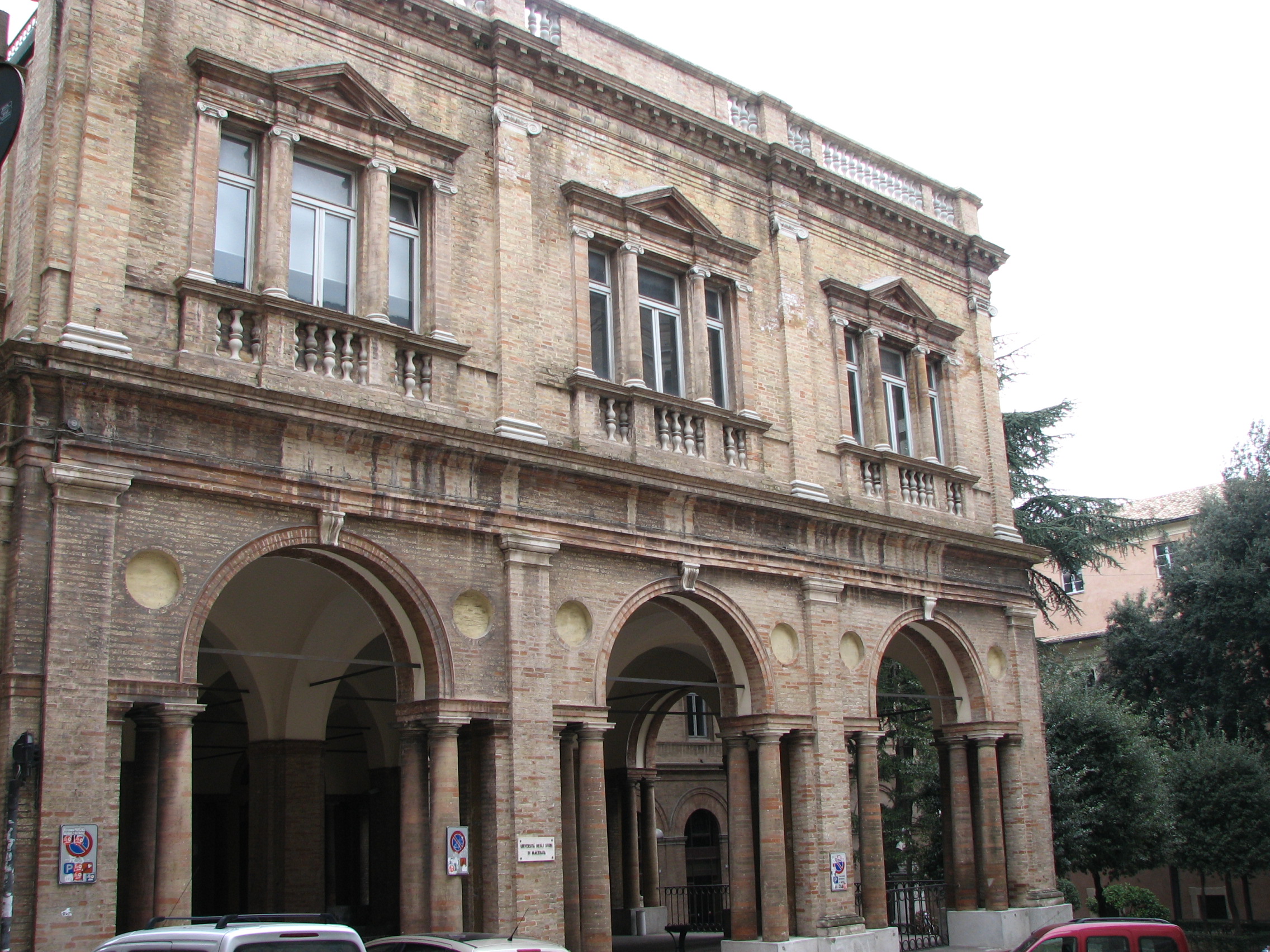
Early communal granaries in the region were typically conversions of existing large-span structures: former episcopal storehouses, the ground floors of tower-house complexes, or the lower storeys of new communal palaces. The purely functional requirement — height-to-width ratios that allowed tall grain heaps without excessive floor moisture, plus adequate air movement — mapped onto the existing typology of the portico: a colonnaded ground floor open on one or two sides.
The open ground floor served multiple purposes. It kept the grain above street-level humidity. It allowed controlled public access during distribution. And it gave the building a civic legibility that reinforced the commune's authority over the food supply. A granary that looked like a fortified warehouse communicated one message; one that opened onto a public square communicated another.
In Ferrara, the Palazzo della Ragione on what is now Piazza Trento e Trieste incorporated grain storage at ground level beneath the judicial chamber above — a physical stacking of civic functions that was common across northern Italian communes. The Ferrara building dates its current form to the 13th century, though the site had communal uses considerably earlier.
Construction Materials and Details
Emilia-Romagna's communal granaries were built overwhelmingly in brick — the dominant construction material of the Po plain, where stone was scarce and fired clay abundant. Walls were typically 60–80 cm thick, sufficient to moderate diurnal temperature swings and slow moisture ingress. Floors were either bare earth packed with lime, fired tile laid on sand, or — in the more ambitious structures — stone slabs on a rubble fill that allowed airflow beneath.
Ventilation was addressed through the aperture pattern rather than through any mechanical device. Ground-floor openings were fitted with wooden grilles rather than solid shutters, allowing cross-ventilation while deterring unauthorised access. Upper-storey louvres — sloped wooden blades set into the masonry — are documented in the accounts of the Bologna frumentaria for 1263 and again in 1289, when a repair contract specifies the replacement of worn louvre boards.
The roof structure was a straightforward timber lean-to or gable, with a pitched profile steep enough to shed the heavy snowfall common to the Po valley winter. Steep pitch also meant a larger air volume above the grain, which helped dissipate the heat generated by grain respiration — a thermal problem that, if unchecked, accelerates spoilage dramatically.
Modena: The Loggia dei Mercanti and Grain Exchange
Modena's grain administration is documented in exceptional detail thanks to the survival of the city's Statuta Communis from 1327, which dedicates several articles to the management of the public grain reserve. The statutes specify that grain received from taxpayers in lieu of cash — a common arrangement in agricultural regions — must be inspected, graded, and stored within 48 hours of arrival at the communal scales. The building used for this purpose was adjacent to the Loggia dei Mercanti, where commercial grain transactions also took place, creating a formal spatial separation between the civic reserve and the open market.
This spatial logic — civic reserve and commercial exchange side by side but institutionally distinct — appears in several Emilian towns. It reflects the commune's dual role as both regulator of and participant in the grain market, a tension that occasionally led to conflicts of interest documented in the same administrative records that describe the buildings.
Later Adaptations: 15th to 17th Centuries
Under the Este in Ferrara and the Bentivoglio in Bologna, the communal grain system was absorbed into signorial administration without significant change to the physical infrastructure. The buildings acquired new names — Camera Frumentaria, Offizio dell'Annona — but the same structures continued in use. What did change was scale: 15th-century expansion of the reserve capacity in Bologna required the construction of a dedicated new building, now lost, described in a 1432 document as having three floors with independent grain storage on each, connected by an internal ramp wide enough for a loaded mule.
By the 17th century, when the region came under direct Papal administration, several of the medieval granary buildings had been converted to other uses: salt warehouses, customs depots, and in at least one documented case in Piacenza, a temporary barracks. The grain-storage function moved to purpose-built structures outside the historic core, designed on the then-fashionable model of the large barrel-vaulted magazzino, built in masonry throughout for fire resistance.
What Survives
Physical survival is patchy. The Loggia del Grano in Florence (outside the region but closely parallel in type) remains intact and is frequently cited as a comparandum. Within Emilia-Romagna, the most substantial survivals are in smaller towns where later development pressure was lower: the communal storehouses of Comacchio, partially extant, and the vaulted ground floor of the former frumentaria at Cento, now incorporated into a later palazzo.
In the major centres — Bologna, Modena, Ferrara — the medieval fabric was substantially rebuilt in the 16th through 19th centuries. Documentary evidence, including account books, building contracts, and occasional inventories of stored grain, preserves the form of the lost buildings with enough precision to allow credible reconstruction drawings, several of which have been published by the Istituto per i Beni Artistici Culturali e Naturali della Regione Emilia-Romagna.
Further Reading
- Guerra Medici, M.T. (1971). L'amministrazione annonaria nel comune medievale bolognese. Bologna: Istituto per la storia di Bologna.
- Pini, A.I. (1990). Città, comuni e corporazioni nel medioevo italiano. Bologna: CLUEB.
- Istituto per i Beni Artistici Culturali e Naturali della Regione Emilia-Romagna: ibc.regione.emilia-romagna.it
See also: Grain Storage Vaults and Their Ventilation Design in Southern Italy · Spelt, Einkorn, and Ancient Cereal Varieties